
How We Used 1/2 Ounce Jigs for Lake Trout in 80–100 Feet of Water | Linn Creek Outdoors
Posted by Randal Zimmerman on Sep 22nd 2026
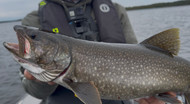
During our September trip to Lower Manitou Lake, we caught lake trout in 80–100 feet of water with a 1/2-ounce Silver and Black EyeCon Jig paired with a 4-inch Z-Man DieZel MinnowZ in Bad Shad.
We also tried 1- and 1.5-ounce presentations. They reached the fish faster, but the lake trout preferred the smaller 1/2-ounce presentation.
The difference came down to boat control, watching the fish on LiveScope and making them chase the bait.
The Tackle
Our setup was:
-
1/2-ounce Silver and Black EyeCon Jig
-
4-inch Z-Man DieZel MinnowZ in Bad Shad
-
7-foot Streamside Elite medium-heavy, fast-action spinning rod
-
20-pound Sureline braid
-
20-pound fluorocarbon leader
The EyeCon gave the fish a clear target, while the DieZel MinnowZ produced steady tail movement as we reeled it through the water column. The medium-heavy rod had enough backbone to control lake trout in deep water while maintaining good contact with the jig.
Boat Control
We used Spot-Lock to hold the boat over the fish and keep the line as vertical as possible.
Too much boat movement creates line angle, making it harder to follow the jig on LiveScope and control its depth. Staying vertical allowed us to fish the lighter 1/2-ounce jig effectively in 80–100 feet of water.
Our LiveScope Presentation
When we saw a lake trout on LiveScope, we lowered the jig to the fish and began reeling it upward.
If the fish followed but did not strike, we dropped the bait below it and reeled up again. We wanted the lake trout to chase the bait rather than letting the jig sit directly in front of it.
The DieZel MinnowZ worked well because its paddle tail continued moving during a steady retrieve.
When We Couldn’t See a Fish
An empty 2D sonar or LiveScope screen did not always mean there were no lake trout nearby.
When we could not see a fish, we dropped the jig to the bottom, bounced it three to five times and then began reeling upward.
That frequently attracted a lake trout we had not seen. It gave us a repeatable way to search the water beneath the boat instead of waiting for a fish to appear on the screen.
If we did not see fish after about 10 minutes, we used the trolling motor’s Jog feature to move 10–30 feet and set up again.
Why the 1/2-Ounce Jig Worked
The 1- and 1.5-ounce presentations reached deep water faster, but they did not produce as well as the 1/2-ounce EyeCon.
The lighter jig worked because we maintained good boat position and kept the line nearly vertical. Under windier conditions or with more boat movement, we would have needed additional weight to maintain control.
Jig weight should match more than depth. Wind, current, boat movement and how the fish respond all matter.
The Complete Process
Our system was simple:
-
Look for fish on regular 2D sonar.
-
Set up LiveScope and start fishing.
-
Lower the bait to the level of the fish and begin reeling upward.
-
If the fish does not strike, drop the bait below it and reel up again.
-
If no fish are visible, lower the jig to the bottom.
-
Bounce it three to five times and begin reeling upward.
-
If nothing appears after about 10 minutes, move 10–30 feet and repeat the process.
-
Keep the line as vertical as possible.
Deep-water lake trout fishing can look complicated, but our most productive setup was not.
Find the fish, make them chase and do not assume an empty LiveScope screen means no lake trout are nearby.